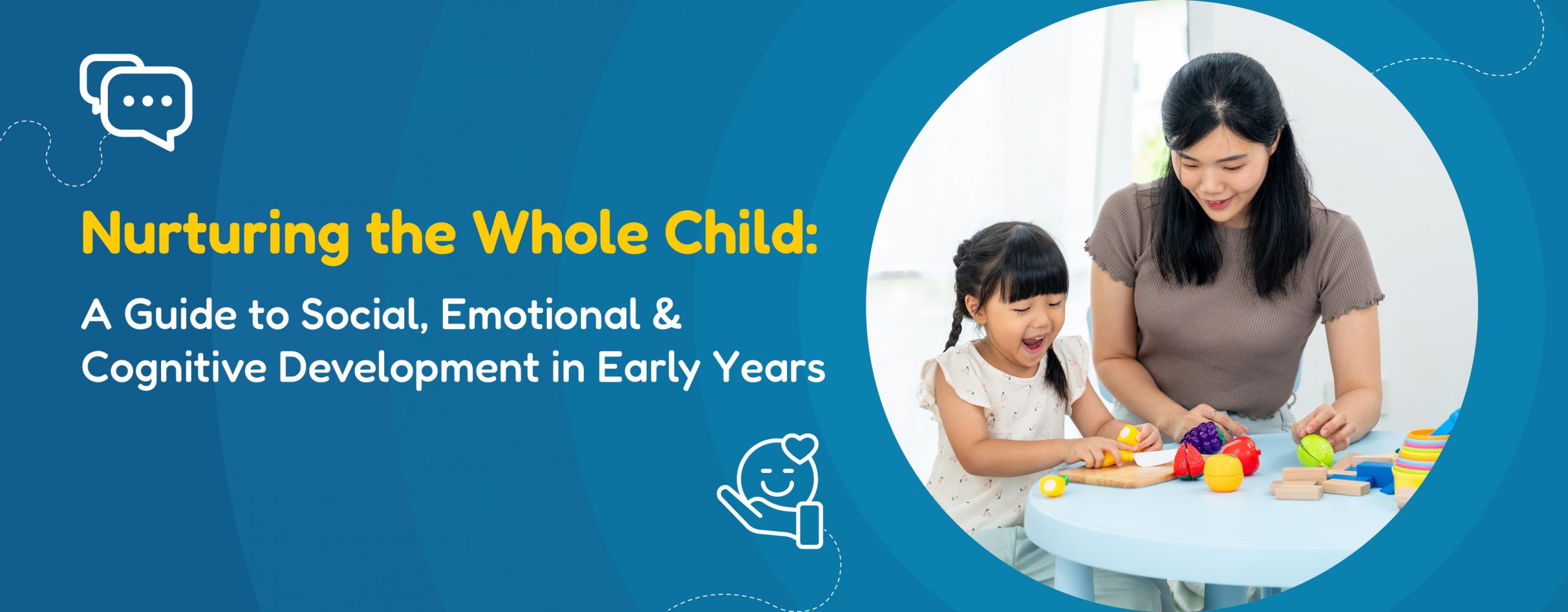
Every parent notices it in small moments first
A child who proudly ties their shoelaces for the first time.
A toddler learning how to share toys.
A preschooler asking endless “why” questions at dinner.
A little one learning to express feelings instead of crying instantly.
These everyday milestones may seem simple, but together they shape something much bigger whole child development
In today’s fast moving world early education is no longer only about alphabets, numbers and worksheets. Increasingly parents and educators are recognising that true learning happens when children grow socially, emotionally and cognitively together.
This is why conversations around early childhood development, social emotional learning and cognitive development have become so important in modern education
At Universal Wisdom School the focus goes beyond academics the early years are seen as a critical stage for building confidence, emotional security, curiosity, communication and lifelong learning habits.
This guide explores how parents can support holistic development in early years understand developmental milestones and create environments that naturally nurture balanced growth
The phrase “whole child development” refers to nurturing every aspect of a child’s growth not just academic ability
Children develop across multiple interconnected areas:
A child may learn numbers quickly but if they struggle to communicate feelings or interact with peers development may feel incomplete
Similarly a highly social child may still need support with attention, memory or learning readiness.
The idea behind the nurturing the whole child approach is simple.
Children thrive best when emotional well being social confidence and thinking skills grow together.
The early years between ages 2 to 8 are among the most important stages of brain development.
Research consistently shows that experiences during these years strongly influence
According to UNICEF Early Childhood Development nurturing environments in the early years significantly affect long term emotional and cognitive growth
Similarly Harvard Center on the Developing Child explains how responsive interactions and positive relationships help build strong brain architecture during childhood.
This is why early years education is about much more than preparing children for school admissions.
It is about preparing them for life
To better understand balanced development in young children it helps to look at the three major developmental domains separately
Social development refers to how children:
Children are not born knowing how to:
These are learned gradually through everyday experiences.
| Age Group | Common Social Behaviours |
| 2-3 Years | Parallel play, copying adults |
| 3-4 Years | Playing in small groups |
| 4-5 Years | Sharing, teamwork, role play |
| 5+ Years | Friendship building, cooperation |
Healthy social growth often appears through
Emotional development focuses on how children:
Strong emotional foundations often influence a child’s ability to:
This is where social emotional learning becomes important
Social emotional learning (SEL) helps children develop
Children who feel emotionally secure are often more willing to
The CASEL Framework for Social Emotional Learning highlights how emotional skills directly impact academic readiness and long term success.
Cognitive development refers to how children:
It includes
Children strengthen cognitive skills when they:
Parents sometimes separate emotions and academics, but in reality, they are deeply connected.
A child struggling with emotional regulation may find it difficult to
This is why experts often discuss integrating social emotional and cognitive learning rather than treating them separately.
For example
The connection between emotions and learning readiness is extremely strong during early childhood.
Parents often ask
“What are practical everyday activities that promote social, emotional and cognitive development at once?”
The answer is reassuringly simple
Children learn best through daily experiences
| Activity | Social | Emotional | Cognitive |
| Storytelling | Listening and interaction | Emotional understanding | Language skills |
| Pretend Play | Cooperation | Expression | Creativity |
| Building Blocks | Teamwork | Confidence | Problem solving |
| Outdoor Play | Social bonding | Stress release | Decision making |
| Art Activities | Sharing ideas | Self expression | Imagination |
| Music and Dance | Group participation | Emotional release | Memory |
The goal is not to overload children with structured learning
Instead meaningful interactions and play based experiences naturally support whole child development.
Play is one of the most powerful tools in preschool development
Through play children learn:
A simple game can involve:
This is why quality early learning environments focus heavily on activity based and experiential learning.
At Universal Wisdom School Early Learning Approach play and exploration are viewed as essential parts of healthy development rather than distractions from learning.
Every child develops at a unique pace, however understanding common milestones can help parents observe healthy growth patterns.
| Age | Social and Emotional | Cognitive |
| 2 Years | Shows affection, imitates adults | Identifies objects, follows simple instructions |
| 3 Years | Begins sharing, plays with peers | Solves simple puzzles, asks questions |
| 4 Years | Expresses emotions verbally | Understands sequences and patterns |
| 5 Years | Builds friendships, follows rules | Counts, recognises letters, reasons logically |
Milestones are guidelines not rigid timelines
Children may progress differently depending on personality, environment and learning exposure.
Many parents quietly wonder:
“My child is academically strong but shy socially.”
“My child is emotionally expressive but struggles with focus.”
“Is this normal?”
In many cases yes
Children often develop unevenly across domains.
A balanced child may
However occasional differences between emotional and cognitive growth are common.
The key is consistent observation and supportive guidance.
This is more common than many parents realise
Some children may:
yet still struggle with:
In such situations forcing social interaction rarely helps.
Instead parents can:
The goal is gradual confidence building rather than pressure.
Children’s development is strongly shaped by their home environment.
The good news is that holistic growth does not require expensive tools or complicated routines. Simple daily habits make a meaningful difference
Talk openly with children about:
Reading supports
Interactive activities are more beneficial than prolonged passive viewing.
Children develop confidence when given age appropriate independence.
Consistent routines help children feel emotionally secure.
Parents often underestimate the value of routine.
A predictable routine helps children:
| Time | Activity |
| Morning | Conversation and preparation |
| Afternoon | School and active learning |
| Evening | Outdoor play |
| Night | Reading and family interaction |
Balanced routines naturally support social emotional and cognitive growth together.
Children learn emotional safety through relationships.
Simple bonding activities can strengthen emotional confidence significantly.
These moments help children feel heard, valued and emotionally secure.
Parents often ask
“Are there specific toys or games best for integrated development?”
Yes but simpler is often better
| Toy Type | Skills Developed |
| Building Blocks | Creativity, reasoning, teamwork |
| Pretend Play Sets | Social and emotional expression |
| Puzzles | Memory and problem solving |
| Art Materials | Creativity and emotional release |
| Board Games | Patience, cooperation, strategy |
The best toys are usually those that encourage interaction imagination and exploration.
Understanding signs of healthy cognitive vs emotional development helps parents notice both strengths and concerns.
Both areas support each other.
Every child develops differently but some signs may indicate the need for professional guidance.
If parents notice persistent concerns consulting
Strong parent school collaboration supports better developmental outcomes.
When parents and educators communicate openly children benefit from
Collaborating with teachers on holistic goals helps ensure children receive balanced support both at home and school.
The conversation around education is changing
Today success is not defined only by academic performance.
Children also need
This is why the importance of whole child development has become central to modern early education.
Children who feel emotionally secure and socially confident are often better prepared to:
The early years are not simply preparation for school they are preparation for life.
Supporting social emotional learning, cognitive development and emotional security together creates stronger foundations for lifelong growth.
The goal is not perfection
The goal is balanced, healthy and confident development
Small daily interactions conversations play, reading, routines and emotional connection shape children more deeply than parents often realise.
At Universal Wisdom School Pune early learning is approached with the understanding that every child deserves an environment where curiosity, confidence, emotional wellbeing and learning can grow together naturally because when children are nurtured as whole individuals learning becomes meaningful far beyond the classroom